
Back
March 24, 2026 | Anthony Mazzenga
Dog Equipment for loose leash walking
That walk starts going sideways fast. Your dog hits the end of the leash, you brace your shoulder, coffee spills, and now a simple trip down the block feels like a wrestling match. If you have been searching for the best leash training tools explained in plain English, here is the truth: the right tool helps, but the tool is never the whole plan. Your timing, consistency, and follow-through matter just as much.
A lot of owners buy gear hoping the equipment will fix pulling on its own. It will not. Good tools make communication clearer and give you safer handling while your dog learns better walking habits. Bad tool choices, or good tools used inconsistently, usually create more frustration for both ends of the leash.
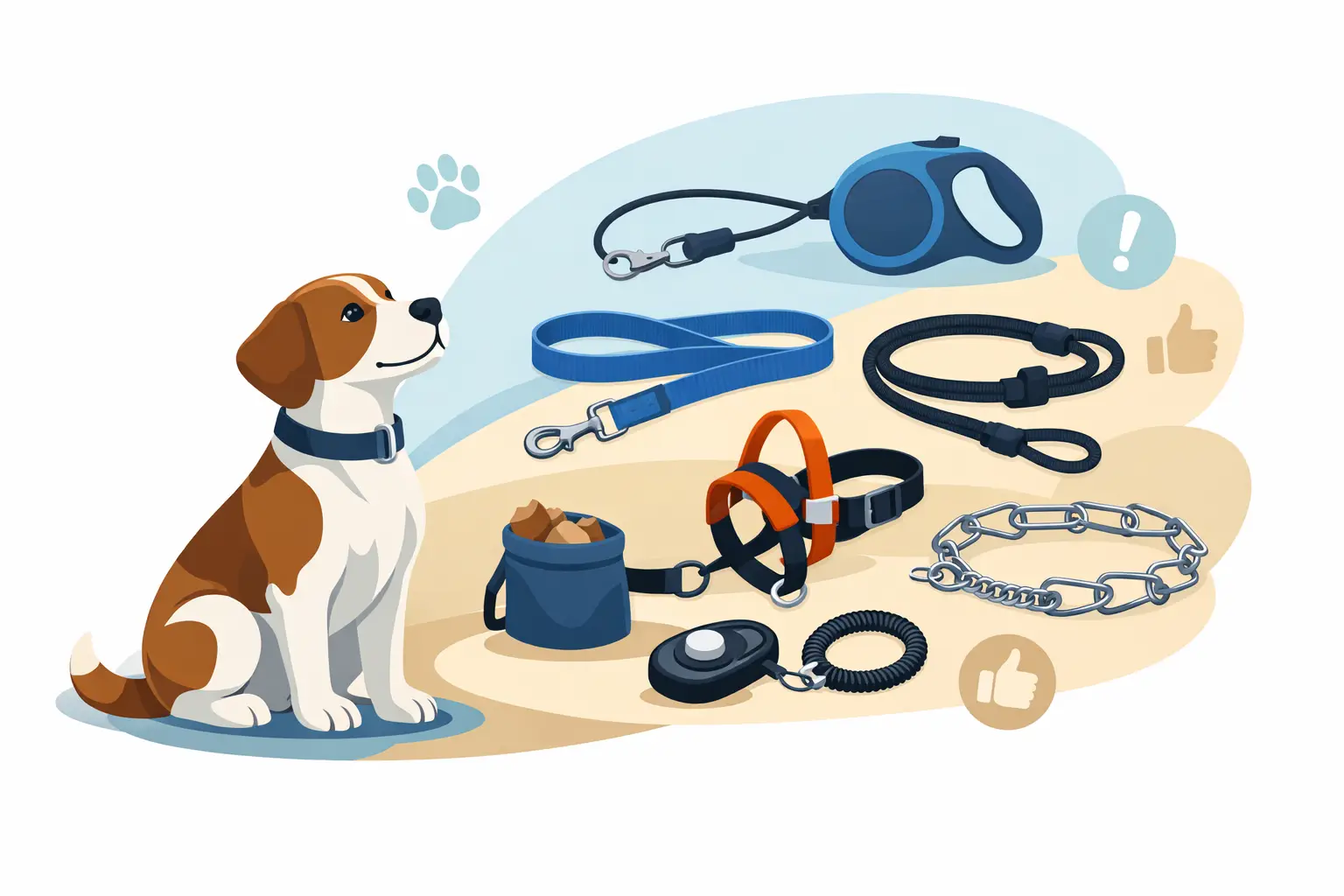
Best leash training tools explained for real-life walks
The best leash training setup depends on your dog’s size, sensitivity, motivation, and walking history. A young, enthusiastic dog that forges ahead is different from a nervous dog that shuts down under pressure. A strong adult dog that has practiced pulling for two years needs a different approach than a puppy learning from day one.
That means there is no magic purchase. There is, however, a smart way to think about your options.
Standard flat collar
A flat collar is simple, familiar, and useful for dogs that already have some leash skills. It works well for ID tags and for dogs that are not actively dragging their owners down the sidewalk. For easygoing dogs, it may be all you need.
The trade-off is control. If your dog lunges, pulls hard, or slips backward when startled, a flat collar can become a poor choice for training walks. It does not offer much steering help, and constant pressure on the neck is not a teaching strategy.
Front-clip harness
For many family dogs, a front-clip harness is one of the most practical starting points. It redirects the dog’s body when they pull forward, which makes it easier for the owner to interrupt that behavior without a tug-of-war. It often gives owners immediate relief, especially with medium and large dogs.
But let’s be clear about what it does and does not do. It manages pulling better. It does not teach loose leash walking by itself. Some dogs also learn to lean through the harness anyway, and some owners let the dog stay at the end of the leash because the harness feels safer. That slows training down.
Back-clip harness
A back-clip harness is comfortable and easy to put on. It can be a solid option for small dogs, older dogs, or dogs being walked casually when pulling is not a major issue. Many owners already have one because it feels straightforward.
For dedicated leash training, though, it is often not the strongest choice. Many dogs can put their full body weight into a back-clip harness, which encourages exactly what you do not want - pulling into pressure. If your walks feel like sled-dog practice, this tool may be part of the problem.
Head halter
A head halter gives significant directional control because where the head goes, the body usually follows. For some strong dogs and some overwhelmed owners, that can be a game changer. It can help reduce lunging and give smaller handlers more leverage.
The catch is fit and conditioning. Many dogs dislike the sensation at first and paw at it, freeze, or become distracted. If you rush the process, you can make walks messier, not better. This is a tool that needs patient introduction and careful handling. It is not for every dog, and it is not a shortcut.
Long line
A long line is not your neighborhood loose leash walking tool. It is a training tool for space, practice, and skill building. Used in an open area, it helps with recall work, engagement, and teaching a dog to move with you while still having some freedom.
What owners get wrong is using a long line in tight suburban walking conditions where it becomes a rope management problem. Around sidewalks, driveways, and distractions, it can create more chaos than clarity. In the right setting, though, it is excellent for building responsiveness.
Standard 6-foot leash
This is still the workhorse. A regular 6-foot leash gives enough room for movement without turning the walk into a free-for-all. It helps keep your handling consistent and your expectations clear. For most training plans, this is the leash you want most often.
Material matters, too. You want something comfortable to hold and easy to manage. If it burns your hands, tangles easily, or feels flimsy with a strong dog, you will handle it poorly when it counts.
Retractable leash
For leash training, this is usually the wrong tool. A retractable leash teaches the dog that moving forward creates more leash. That is the opposite of loose leash walking. It also reduces your control in moments that matter, like passing a dog, crossing a street, or handling a sudden distraction.
Can some dogs use one safely in the right environment? Sure. But if your goal is better manners and clearer walking habits, it is rarely the best choice.
What makes a tool "best" for leash training?
The best leash training tools explained honestly come down to three standards. First, the tool should improve communication, not just restrain movement. Second, it should help the owner stay consistent. Third, it should fit the dog well enough to be safe and clear.
That middle point matters more than people think. If a tool is technically good but you hate putting it on, struggle to fit it, or use it differently every walk, progress will stall. The best gear is the gear you can use correctly every single time.
The tool is not the training plan
This is where a lot of dog owners lose momentum. They buy a harness, see two better walks, and assume the issue is fixed. Then the dog starts pulling again because the actual habit never changed.
Loose leash walking improves when the dog learns that staying connected to you pays off and dragging you around does not. That means you need repetition. Stop when the leash goes tight. Reward position and check-ins. Change direction when needed. Keep your standards the same from one walk to the next.
If one family member allows pulling and another does not, your dog will notice. Dogs are excellent pattern readers. They do what works.
Best leash training tools explained with common owner mistakes
Most leash problems are not just dog problems. They are handling problems. Owners move too fast, ask for too much too soon, or become inconsistent the second the dog gets excited.
A common mistake is choosing a tool based on a five-star review instead of the dog in front of you. Another is expecting neighborhood walks to double as training, exercise, and socialization all at once. That is a lot. Some dogs need shorter, more structured sessions before they can succeed on a busy street.
Another mistake is letting frustration take over. Tight hands on the leash, repeated verbal corrections, and jerky movements usually make dogs more frantic, not calmer. Better mechanics from the owner often create better behavior from the dog. That can be hard to hear, but it is the truth.
How to choose the right setup for your dog
Start with your actual problem, not the product. Is your dog forging ahead nonstop? Spinning and biting the leash? Lunging at other dogs? Panicking at traffic? Those are different issues, and the same tool will not solve all of them.
For basic pulling, many owners do well starting with a front-clip harness and a standard 6-foot leash while they work on engagement and leash pressure lessons. For dogs that need more directional control, a head halter may help if introduced carefully. For skill building in open areas, a long line can be useful. For dogs already showing good manners, a flat collar may be enough.
If you are dealing with stronger reactions, not just pulling, the smartest move is to stop guessing. A good trainer can save you months of trial and error by matching the tool to the dog and showing you how to use it correctly. That matters for busy families who want calmer walks, not another drawer full of failed gear.
At Echo Dogs Training, that is the approach we push - clear coaching, consistent owner habits, and tools used with purpose, not wishful thinking.
What progress should actually look like
Real leash training progress is not one perfect walk. It is fewer hard pulls, faster recovery after distractions, better check-ins, and a dog that starts to understand how to move with you instead of against you. That is practical progress. That is what improves daily life.
Some dogs change quickly. Others need a longer runway, especially if they have spent months or years rehearsing bad habits. That does not mean the training is failing. It means the reps matter.
If your walks in Malvern, West Chester, or Downingtown feel stressful every single day, do not wait until the frustration turns into avoidance. Get the right setup. Get clear on your standards. Then stick to them.
The best tool is the one that supports better handling, better timing, and better habits on both ends of the leash.