
Back
March 23, 2026 | Anthony Mazzenga
Front clip vs back clip Harness
If your dog turns every walk into a towing job, a front clip harness probably landed on your shopping list fast. This front clip harness for pulling review is the honest version most owners actually need - not whether a harness can help, but whether it can fix the problem by itself. Short answer: it can help a lot, but it is not a substitute for training.
That distinction matters because pulling is rarely just a gear issue. It is usually a handling issue, a consistency issue, an arousal issue, or some combination of all three. The harness may reduce leverage and give you more control, but your dog still needs to learn how to walk with you instead of dragging you down the sidewalk.
Front clip harness for pulling review - what it does well
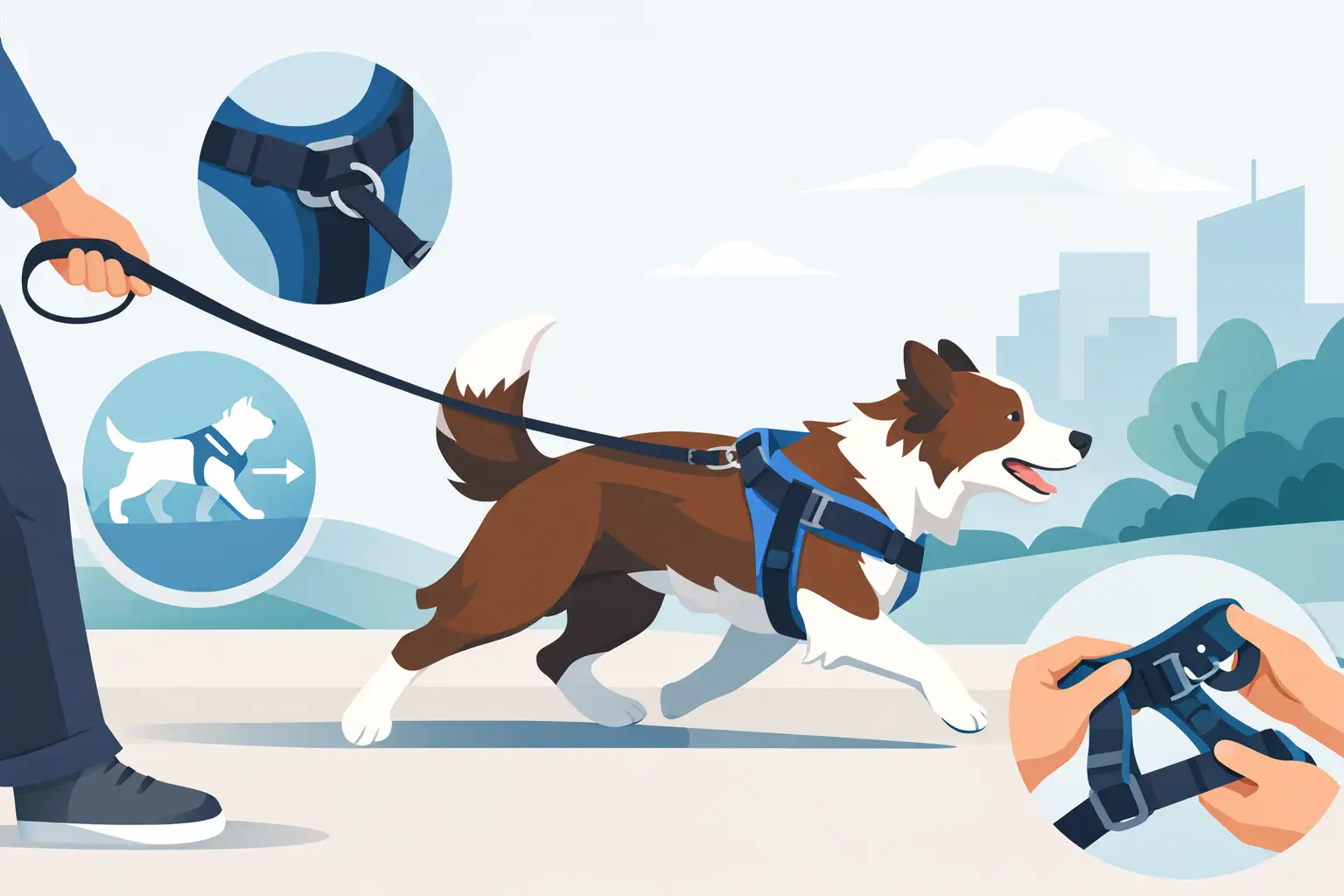
A front clip harness attaches the leash at the dog’s chest instead of the back. When the dog surges forward, the design redirects the body slightly to the side rather than letting the dog lean into the pull with full force. For many owners, that creates immediate relief.
That relief is real. If you have a large adolescent dog, a powerful breed, or a dog that hits the end of the leash every time a squirrel moves, a front clip setup can make walks safer right away. It often reduces the brute strength battle, which is especially helpful for families, smaller handlers, or anyone who is tired of getting yanked at every driveway.
Another advantage is management. Good management is not the enemy of training. It is what keeps things from getting worse while training catches up. A front clip harness can buy you enough control to practice better leash skills without being pulled off balance. That matters.
It can also reduce rehearsal of bad behavior. Every time your dog pulls and gets where he wants to go, pulling pays. A front clip harness can interrupt that pattern by making the behavior less effective.
Where a front clip harness falls short
Here is the part owners need to hear clearly: a harness does not teach loose leash walking. It changes mechanics. That is useful, but it is not education.
Some dogs figure out the harness quickly and keep pulling anyway, just with a different body angle. Others learn to crab-walk sideways, forge ahead with one shoulder, or bounce around the end of the leash in a way that is still exhausting for the person holding it. If the owner keeps moving forward while the dog is pulling, the dog is still being rewarded.
Fit is another common problem. A poorly fitted front clip harness can rub the armpits, shift off center, restrict shoulder movement, or sit low and twist during the walk. If your dog looks uncomfortable, scratches at the harness, or develops irritation behind the front legs, the issue may be the fit rather than the concept.
There is also a training trap here. Some owners buy better equipment and then stop there. They expect the walk to improve because they made a purchase. But dogs do not care what the package promised. They respond to repetition, timing, and clear patterns. If your handling stays inconsistent, the pulling usually stays too.
What to look for in a good front clip harness
The best front clip harness is the one that fits your dog correctly and supports your training instead of getting in the way. That sounds simple, but this is where many reviews get sloppy.
Look for a harness with a secure chest attachment point, enough adjustability to fit snugly without pinching, and a design that does not slide excessively from side to side. You want room for natural movement, but not so much looseness that the whole thing rotates every time your dog changes direction.
Padding can help, but more padding is not automatically better. Bulky material can trap heat and create awkward pressure points on some dogs. Hardware should feel sturdy, and the harness should be simple enough that you can put it on correctly every time. If it takes a diagram and a pep talk before every walk, it is probably not the right choice for your household.
A back clip option can also be useful on the same harness, depending on your training goals. But if your dog is a serious puller, many owners accidentally switch to the back clip because it is easier, then wonder why the dog is leaning into the leash like a sled dog again.
Front clip harness for pulling review - who benefits most
This tool tends to help most with dogs that are enthusiastic, impulsive, and physically strong but not fully committed to fighting the equipment. In plain language, if your dog pulls because he is excited and untrained, a front clip harness often helps. If your dog pulls with intense determination, high arousal, or a long history of rehearsing the behavior, it may help less than you hoped.
Puppies and adolescent dogs often benefit because owners can start building better patterns early. It can also be helpful for rescue dogs adjusting to a new routine, where management and safety matter while the dog learns the rules of the walk.
It may be less helpful for dogs that panic in equipment, have unusual body shapes that make fit difficult, or become more frustrated when redirected. That does not mean the dog is impossible. It means the solution has to be more thoughtful than grabbing whatever harness had good online ratings.
The real test - does your handling improve too?
This is where honest review matters. A front clip harness is only as useful as the person holding the leash.
If you clip it on and still let your dog charge out the door, hit the end of the leash, scan for distractions, and drag you from smell to smell, the harness is doing all the work it can. You are still feeding the same habit loop. That is why some owners swear by front clip harnesses and others say they are useless. The difference is often not the dog. It is the follow-through.
Good leash walking starts before the walk. Can your dog wait at the door? Can your dog leave the house without launching into the driveway at full speed? Can you get eye contact or at least a moment of composure before moving forward? Those details matter because pulling is often the visible symptom of a dog who is already over threshold before the walk even begins.
On the walk itself, your dog needs clear feedback. Pulling should not move the walk forward. Attention and position should. That takes timing and repetition. Not once. Not when you feel like it. Every walk.
Common mistakes owners make with front clip harnesses
The first mistake is buying the harness and skipping the training plan. The second is inconsistent rules. One day the dog has to walk nicely, the next day he is allowed to pull because you are in a hurry. Dogs notice patterns fast, and they are very good at spotting loopholes.
Another mistake is using too much leash and too little structure. A front clip harness is not magic if your dog is wandering all over the place at the end of six feet of tension. Shorten the picture. Be clear. Reward the behavior you want before the dog is fully committed to pulling.
Many owners also wait too long to address the issue. By the time they ask for help, the dog has practiced pulling for months or years. You can absolutely improve that, but it takes more repetition and more owner discipline than people expect.
So, is a front clip harness worth it?
Yes - if you understand what you are buying.
A front clip harness is worth it as a management and training tool. It is often safer, more comfortable than fighting with a flat collar alone, and helpful for reducing the sheer force of pulling. For plenty of dogs, it makes walks more manageable almost immediately.
But if you are hoping it will create a calm, attentive walking partner without any change from you, that is where the review turns. It will not do that job. Your dog still needs direction. Your dog still needs repetition. And you still need to stop rewarding the very behavior you want gone.
That is the hard truth, but it is also the encouraging part. Because once owners get consistent, progress usually comes faster than they expect. Better walks are not about finding a magic product. They are about pairing the right tool with better habits.
If walks in Malvern, Paoli, Downingtown, or the surrounding suburbs feel like a daily argument, that is fixable. The gear matters some. Your follow-through matters more. If you need help building that structure, Echo Dogs Training works with owners through the real-life stuff that wears families down - leash pulling, door chaos, barking, and the pattern of a dog tuning you out when it counts.
Start with the harness if you need better control. Then do the part that actually changes behavior. Your dog does not need a miracle. Your dog needs clarity, consistency, and a handler willing to lead.