Back
May 25, 2026 | Anthony Mazzenga
3--3-3 Rule
New Dogs/puppy
The first few days with a newly adopted dog can feel confusing fast. One minute they are shut down and quiet, the next they are pacing, barking at the door, having accidents, or acting like they forgot every cue you thought they knew. That is exactly why the 3-3-3 rule in adopting dogs/puppies gets talked about so often. It gives people a simple way to understand adjustment. But simple is not the same thing as complete.
If you are bringing home a rescue dog or puppy, the 3-3-3 rule can be helpful as a starting point. It can also mislead owners if they treat it like a guarantee instead of a rough framework. Real dogs do not read timelines. They respond to stress, consistency, routine, and the habits we build with them from day one.
What the 3-3-3 rule in adopting dogs/puppies means
The basic idea is this: many adopted dogs go through three general adjustment periods.
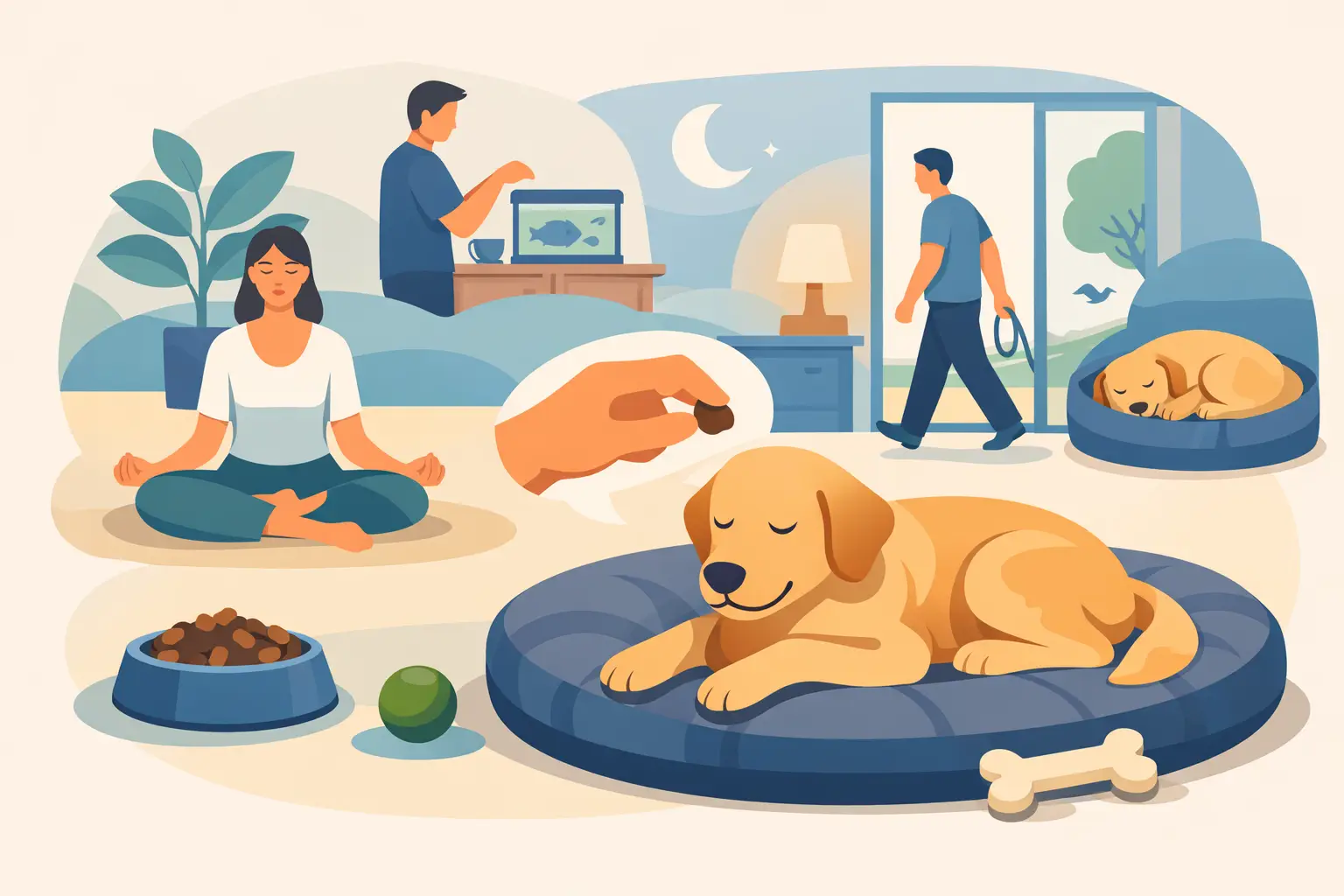
The first 3 days are often about decompression. Your new dog may seem overwhelmed, withdrawn, clingy, restless, or extra tired. Some dogs barely eat. Others pace, whine, or watch everything. Puppies can look playful one moment and completely overloaded the next.
The first 3 weeks are often when the dog starts learning the household rhythm. They begin to understand where to sleep, when meals happen, who opens the door, what the leash means, and what gets your attention. This is also when behavior issues often become more obvious. Jumping, barking, stealing food, accidents, chewing, and testing boundaries frequently show up here.
The first 3 months are usually when the dog settles in more fully and starts building trust. This is when personality becomes clearer. It is also when your routines start paying off, or your inconsistency starts costing you.
That last part matters. A lot.
Why people like the 3-3-3 rule
It gives stressed owners some relief. If a dog seems off in the first few days, the rule reminds people not to panic. Your dog may not be stubborn, dominant, manipulative, or trying to make your life harder. They may just be adjusting.
That is useful. Especially for families who expected instant gratitude and instead got barking at guests, crate whining, or a dog that shuts down on walks.
The 3-3-3 rule also helps curb one common mistake: asking too much too soon. New owners often want neighborhood walks, visitors, playdates, restaurant patios, and perfect house manners immediately. That is a lot to put on a dog that does not yet know your home, your expectations, or whether they are safe.
Where the 3-3-3 rule falls short
Here is the no-nonsense version: the timeline is not wrong, but it is not precise.
Some dogs decompress in a day. Some take weeks. Some appear calm at first because they are shut down, then become much more active and reactive once they feel comfortable enough to express themselves. Owners often mistake that change for the dog getting worse. In reality, the dog may simply be showing you who they are.
Puppies are a little different too. A young puppy may adjust faster to the home itself but still struggle with biting, house training, over-arousal, and poor impulse control because they are puppies. That is not an adjustment issue alone. That is a training and management issue.
Breed tendencies, age, history, health, prior training, and household setup all matter. A dog moving into a quiet home with clear structure may settle faster than a dog entering a busy house with kids, guests, inconsistent rules, and no routine. Same dog. Different outcome.
So yes, respect the 3-3-3 rule. Just do not hide behind it. If your dog is practicing bad habits for three weeks straight, those habits are getting stronger.
The first 3 days: keep things calm, clear, and boring
Most new owners either overwhelm the dog or feel sorry for the dog and remove all structure. Both choices create problems.
Your job in the first few days is not to entertain your new dog nonstop. It is to lower pressure and create predictability. Keep the environment calm. Limit visitors. Skip the parade of introductions. Use a leash when needed indoors so you can prevent door dashing, counter surfing, and chaotic greetings before they become routines.
Start house rules immediately. Not harshly. Clearly.
If you do not want the dog on the couch long term, do not allow it because they had a hard week. If you do not want barking at the front window to become a daily habit, manage access now. If bolting through doorways would be a safety issue, begin practicing threshold control right away in simple, low-drama reps.
Compassion and structure are not opposites. Good structure helps dogs relax because the day makes sense.
The first 3 weeks: this is where habits start
This stretch is where many owners get tripped up. The dog is more comfortable, which sounds good, but comfort often brings more behavior.
You may now see leash pulling, selective hearing, mouthiness, barking at noises, clinginess, accidents, or rough play. Families sometimes take this personally. Do not. But also do not ignore it.
This is the right time to build the basics that make daily life easier: a consistent potty routine, calm crate or place time, waiting at doors, not mugging people for attention, and responding to their name. These are not fancy skills. They are the foundation of a peaceful house.
If your dog jumps on guests and you keep letting some people pet them while others correct them, you are teaching confusion. If your puppy barks for attention and you sometimes give in because you are tired, you are paying them for the behavior you dislike. Dogs learn from what works, not from what we meant.
That is why owner follow-through matters more than owner intention.
The first 3 months: trust grows, expectations should too
By this point, many adopted dogs have a better sense of your routine and your standards. This is when you should be seeing progress in everyday life, not perfection, but progress.
Walks should start feeling more manageable. Door routines should look calmer. Recovery from excitement should get faster. Your dog should have a clearer understanding of what leads to freedom, attention, food, and access.
This is also when some owners accidentally back off too much. The dog seems settled, so the structure disappears. Bedtimes slide. Visitors create chaos again. Practice gets inconsistent. Then people wonder why barking, jumping, and ignoring cues return.
Because behavior needs maintenance. Especially in a new home.
What helps more than the timeline itself
The 3-3-3 rule gives context. Structure creates results.
A dog adjusting well usually has a home with predictable feeding times, clear potty schedules, supervised freedom, managed greetings, and consistent responses from the humans. That does not mean the dog never struggles. It means the humans are not adding extra confusion.
For busy families, this is where things often break down. One person allows couch jumping. Another gets frustrated at barking. Someone forgets the potty routine. The kids hype the dog up before guests arrive. Then the dog gets blamed for being wild.
Dogs are not great at sorting through mixed messages. If you want a calmer dog, your household has to get calmer and more consistent first.
In places like Malvern, West Chester, and Downingtown, where daily life often means school pickup traffic, neighborhood walks, delivery drivers, and busy evenings, practical home manners matter more than social media training tricks. Your dog needs to live well with your real routine.
When to give it time, and when to get help
Some issues improve with decompression and routine. Mild uncertainty, clinginess, temporary appetite changes, and general restlessness often settle as the dog learns the environment.
Other issues should not be brushed off with, “they just need more time.” Repeated door charging, escalating barking at people or dogs, hard leash reactions, panic when left alone, resource guarding, or a puppy that cannot settle at all are signs that you need a plan, not more guessing.
Early support can prevent bad habits from becoming the dog’s normal pattern. That does not mean your dog is broken. It means you are being responsible.
A coach-led approach can help owners stop reacting emotionally and start responding clearly. That shift alone changes a lot. At Echo Dogs Training, that is a big part of the work - helping owners build the habits that produce calmer, more reliable behavior at home and on walks.
The real takeaway on the 3-3-3 rule in adopting dogs/puppies
Use the timeline as a reminder to stay patient. Do not use it as an excuse to be passive.
Your new dog does need time. They also need leadership, routine, and clear expectations. If you wait three months to address jumping, barking, bolting, or not listening, your dog has had three months of rehearsal. That is not kindness. That is drift.
A newly adopted dog does not need a perfect owner. They need a steady one. Show them what daily life looks like. Be fair. Be consistent. Mean what you teach. That is how trust gets built, and that is how a rescue dog or puppy becomes part of the family for real.