Back
June 24, 2026 | Anthony Mazzenga
10 Best Commands for Household Manners
If your dog listens in the living room but falls apart when someone rings the bell
A dog does not wreck the evening all at once. It happens in small, repeatable moments - launching at guests, barking at the window, crowding the kitchen, blowing through doors, ignoring you when it matters. That is why the best commands for household manners are not flashy tricks. They are practical skills that make daily life calmer, safer, and far less frustrating.
If your dog listens in the living room but falls apart when someone rings the bell, you do not have a dog who is being stubborn for fun. You have a dog who needs clearer expectations, better repetition, and more follow-through from the human end of the leash. That is the honest part many owners need to hear. Manners are built, not wished into place.
What makes the best commands for household manners work
The right command does two things. It tells your dog exactly what to do, and it gives you a reliable way to interrupt unwanted behavior before it snowballs. Good household commands are simple, repeatable, and useful in real life.
That last part matters. A command is only valuable if you can use it while carrying groceries, helping kids with homework, answering the door, or trying to cook dinner without a dog parked under your feet. Complicated training plans tend to fall apart in busy homes. Clear commands and consistent handling hold up better.
1. Sit
Sit is basic, but basic is not the same as unimportant. A solid sit helps with greetings, meals, leashing up, and any moment when your dog wants to surge forward. It gives your dog one clear job instead of leaving them to make their own decision.
The mistake owners make is using sit once and assuming it should work everywhere. It will not. A sit in a quiet kitchen is different from a sit when the doorbell rings. If you want this command to support household manners, practice it around the real triggers that create chaos.
2. Place
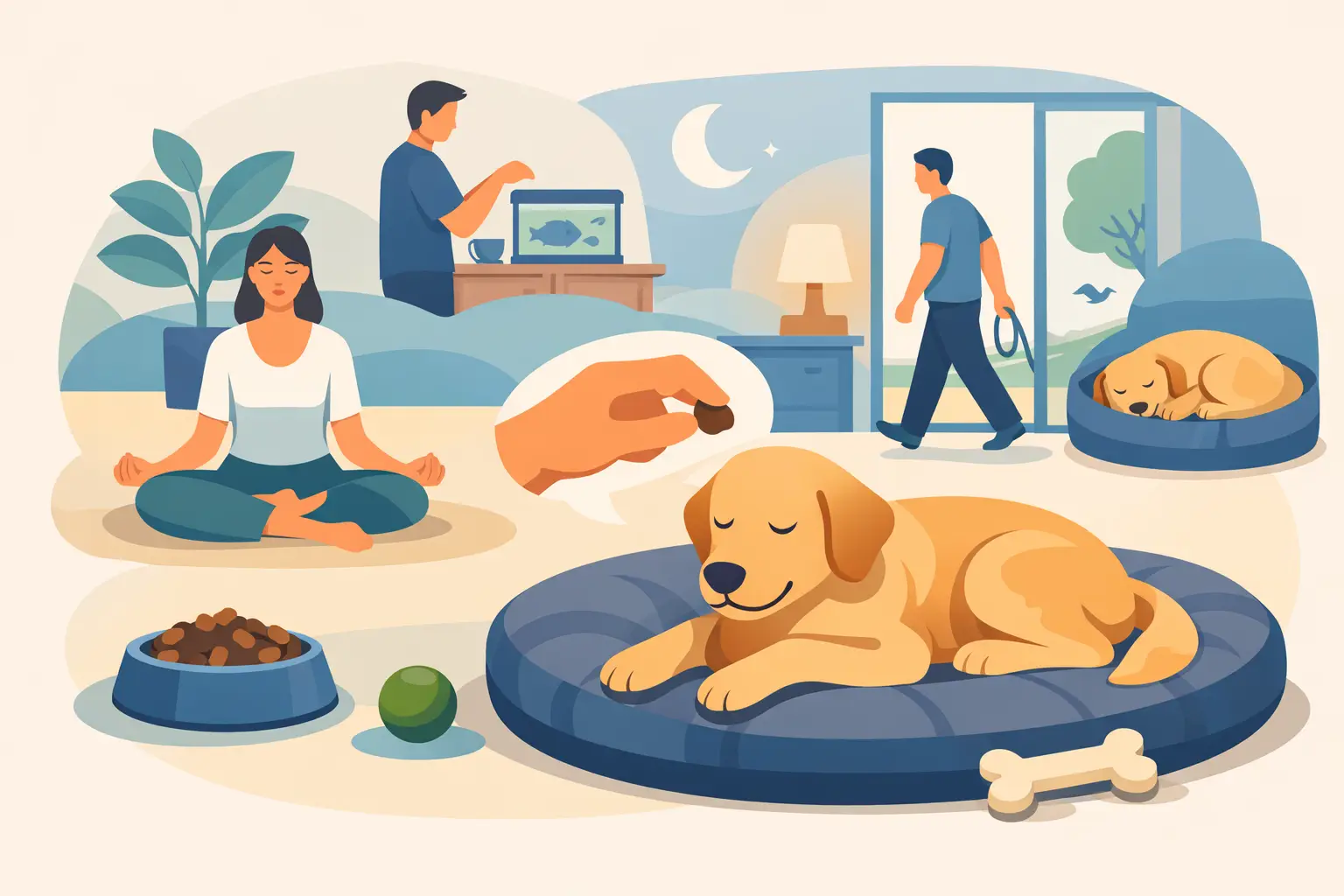
If you want one command that changes a household fast, place is high on the list. It teaches your dog to go to a bed, mat, or platform and stay there until released. That gives you a practical tool for guests arriving, food being served, kids moving around, or service people coming to the house.
Place is stronger than telling a dog to go away for a second. It creates duration and structure. For many families, this is the difference between constant management and actual control.
3. Down
Down has a calming effect for many dogs because it lowers their body and reduces pacing. It is useful when your dog is overstimulated, pushy, or unable to settle. In homes with a lot of movement, down can help slow the dog’s engine.
Still, it depends on the dog. Some dogs find down harder than sit, especially in stimulating situations. If your dog pops right back up, the issue may not be defiance. It may mean you have not built enough duration or the environment is too hard too soon.
4. Stay
Stay matters because household manners fall apart when a dog cannot hold position. Sitting for one second is easy. Staying seated while the front door opens is where the training shows.
A useful stay is built in layers. First duration, then distance, then distraction. Owners often rush all three at once and end up frustrated. Slow it down. If your dog breaks a stay repeatedly, that is information. The task is too hard, or your follow-through is inconsistent.
5. Come
A reliable recall is not just for parks and backyards. At home, come can stop a dog from charging visitors, raiding the trash, pestering the cat, or blowing off your first request. It is one of the most important safety commands you can teach.
The catch is simple. If come only predicts the end of fun, your dog will avoid it. You need to build value into the command and use it enough that responding quickly becomes a habit. Then, when you actually need it, your dog has a history of success.
6. Leave it
Leave it is a household lifesaver. It applies to dropped food, shoes, kids' toys, counters, trash, and anything else your dog thinks belongs to them. More than that, it teaches impulse control.
This command works best when you are direct and timely. Say it once, guide the dog to the correct choice, and reward the decision to disengage. Repeating it five times while your dog continues grabbing the item only teaches them that your voice is background noise.
7. Off
Off means remove your paws or body from that thing. It is useful for jumping on people, climbing on furniture you do not want your dog on, or bracing against counters and tables.
Be careful not to confuse off with down. Down means lie on the floor. Off means get off the object or person. The more precise you are, the faster your dog learns.
8. Wait
Wait is excellent for thresholds. Front doors, car doors, crate doors, gates, and even food bowls. If your dog tends to bolt, wait can bring immediate structure to risky moments.
This is one of the best examples of training that protects your dog and lowers your stress. In busy suburban neighborhoods, where doors open often and people come and go, threshold control is not optional. It is part of responsible ownership.
9. Quiet
Barking is one of the biggest household complaints, but quiet only works if you teach it instead of yelling over the noise. First your dog needs to understand the cue. Then you need to use it early, before barking spirals into full arousal.
Also, be honest about why your dog is barking. Window barking, demand barking, alert barking, and boredom barking are not the same problem. Quiet can help, but if your dog is under-exercised, overstimulated, or rehearsing the behavior all day, the command alone will not fix it.
10. Go to bed
This can overlap with place, but for some families it helps to keep a separate, more casual version. Go to bed tells the dog where to settle during everyday downtime. It is useful when you want calm without making every moment feel formal.
For dogs that pace in the evening or hover during meals, this command creates a routine. Dogs often do better when rest is taught, not just hoped for.
How to choose the best commands for household manners in your home
Not every household needs the exact same command set. A retired couple may care most about polite greetings and quiet evenings. A family with young kids may need door control, leave it, and place at the top of the list. A busy professional in Malvern or West Chester may want a dog that settles reliably while work and home life overlap.
Start with the moments that create daily friction. If your dog jumps on every guest, sit and place deserve immediate attention. If the front door is a danger zone, focus on wait and stay. If barking runs the house, quiet and place may be more valuable than teaching another obedience cue your dog rarely uses.
Why commands fail in real life
Usually it is not because the dog is incapable. It is because the training is too inconsistent to hold up under pressure. Owners say the cue differently every time, repeat it without follow-through, or only practice when there is a problem. Then they expect reliability during the hardest moment of the day.
Dogs learn patterns. If your pattern is loose, your results will be loose too.
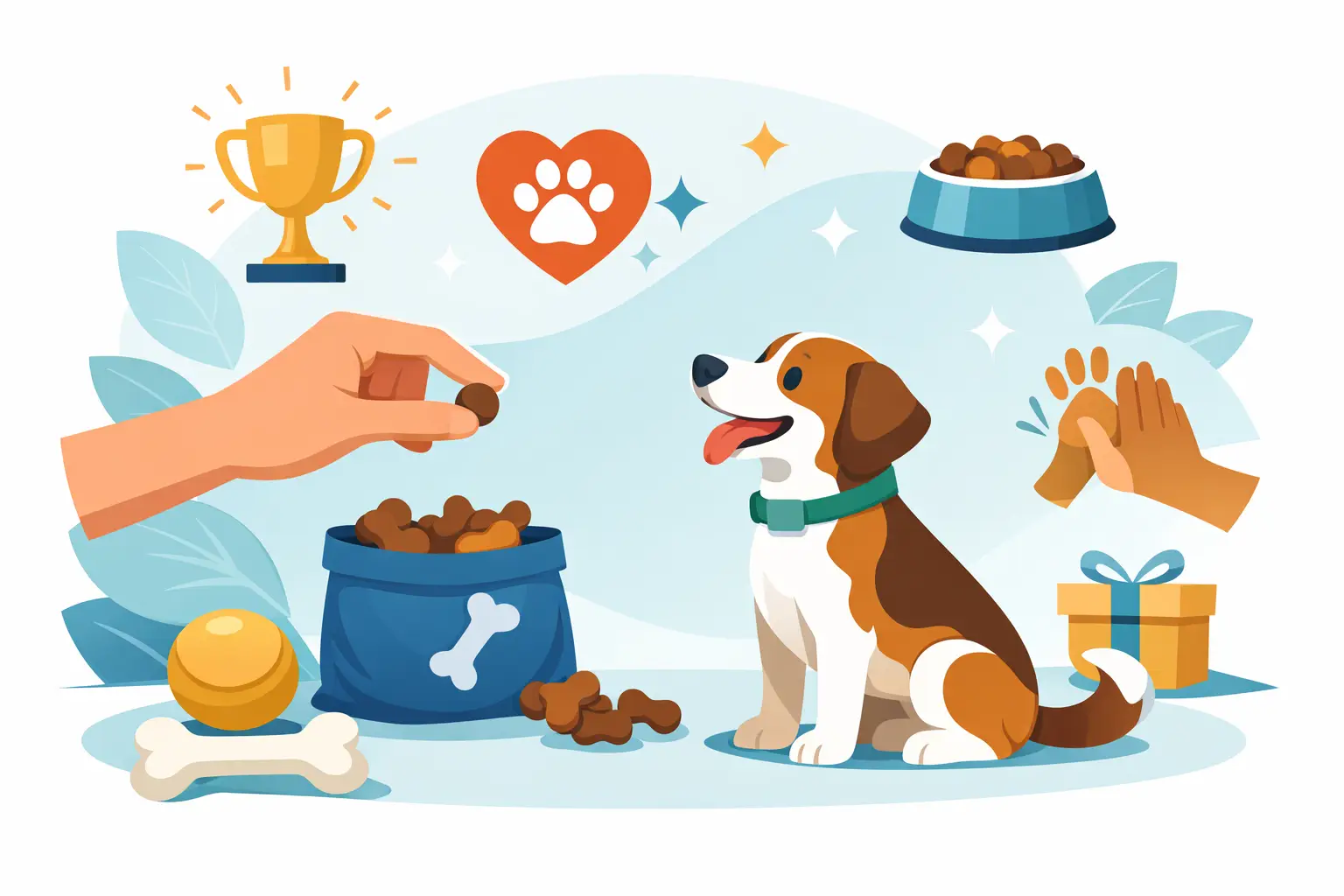
That does not mean perfection. It means being clear. Say the command once. Help your dog make the right choice. Reward the right behavior. Repeat it enough that it becomes familiar. Then increase difficulty gradually instead of throwing your dog into the deep end.
The real goal is not obedience for show
The goal is a calmer dog who can live well with people. That means less chaos at the door, fewer arguments over barking, safer movement through thresholds, and a dog who understands how to settle inside the house. Training should make life easier, not turn into a constant negotiation.
At Echo Dogs Training, that is the standard we care about most - livable results. Not random tricks. Not one good session followed by a week of backsliding. Real manners come from repetition, structure, and owners who stop excusing the behavior they say they want to change.
If you want a better-behaved dog at home, start with fewer commands, not more. Pick the ones that solve your biggest daily problems, teach them clearly, and hold the line. Dogs do better when we do better.