Back
Dog Comunication why is he growling
Discover insights and ideas that matter to you
You reach down to move your dog off the couch, and suddenly you hear it - a low growl you have never heard before. That moment gets your attention fast. If you are asking, why is my dog growling, the first thing to understand is this: growling is communication, not betrayal. Your dog is not trying to be dramatic. Your dog is telling you something feels wrong, stressful, uncomfortable, or worth guarding.
That does not mean you should ignore it. It means you should stop guessing and start reading the situation clearly. A growl is a warning. Warnings matter. They give you information before a bite, a fight, or a bigger household problem shows up. Start learning to read your dog , this did not just come out of no where and its not nothing , growling is comunication and the first step to something worse if you ignore it
Why is my dog growling in the first place?
Dogs growl for different reasons, and context changes everything. A dog growling during tug can sound very different from a dog growling when someone approaches their food bowl. Same sound family, very different meaning.
Most of the time, growling falls into a few categories: fear, discomfort, resource guarding, overstimulation, pain, frustration, or conflict around handling and boundaries. Some dogs also growl during play, but even playful growling should be read with the whole picture in mind - body posture, facial tension, movement, and what happened right before it started.
A lot of owners make the same mistake here. They focus only on the noise. The smarter move is to ask, what is my dog reacting to, and what pattern keeps showing up?
Fear and stress are common reasons dogs growl
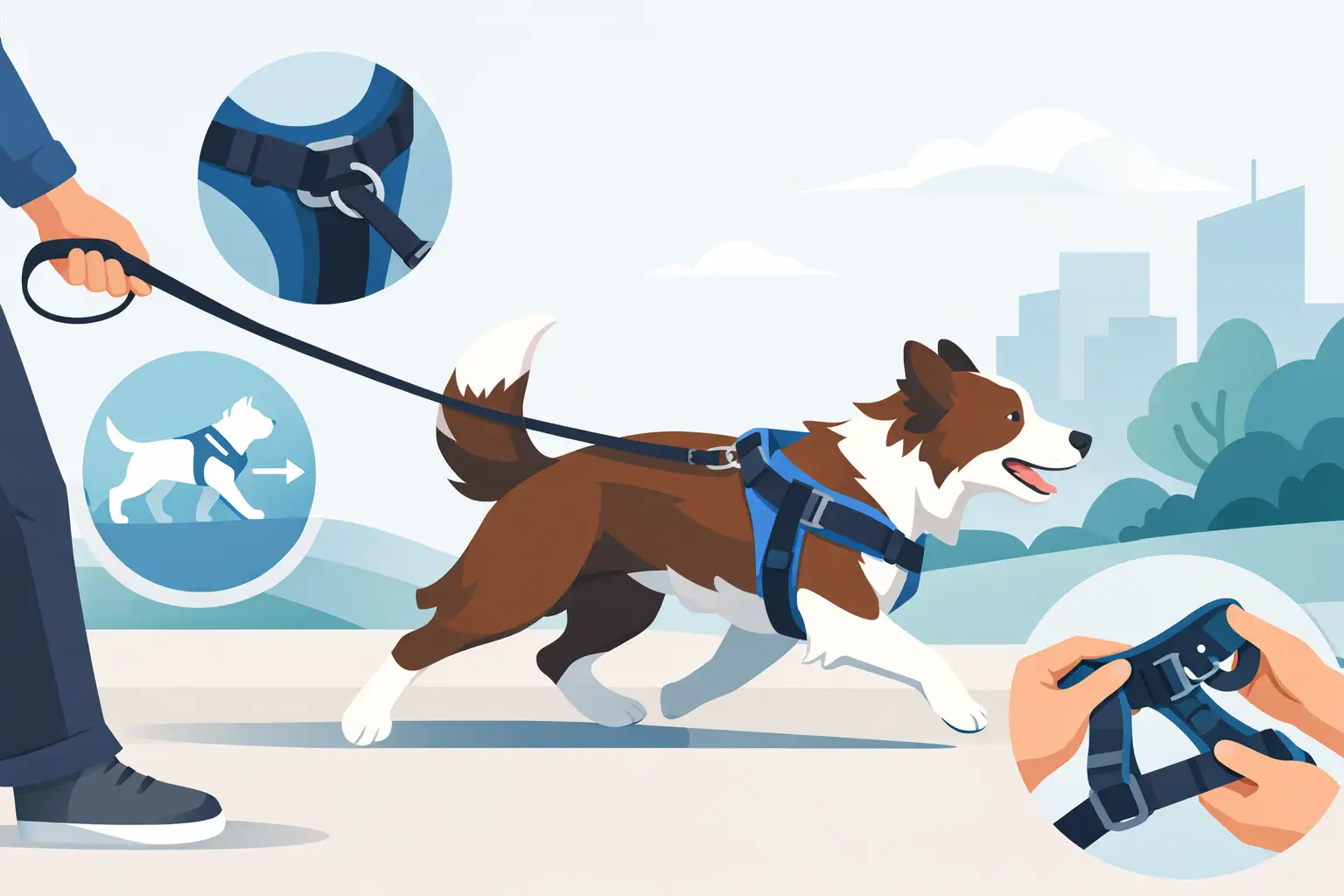
A fearful dog may growl because they do not feel safe. That could be around strangers, kids moving too fast, another dog on a walk, a person leaning over them, or even routine situations like nail trims or putting on a harness.
This matters because many dogs are not being stubborn or dominant. They are trying to create distance. Growling is often the dog saying, back up, slow down, or I cannot handle this well right now.
If your dog growls when visitors enter the house, when someone approaches the crate, or when a child crowds them, do not write it off as attitude. Stress has a pattern. Once you know the trigger, you can address the behavior instead of reacting emotionally to the sound.
Pain can change behavior fast
If your normally easygoing dog starts growling out of nowhere, pain needs to be on your list right away. Dogs with ear infections, dental pain, sore hips, arthritis, injuries, or skin irritation often become more defensive when touched or moved.
Owners sometimes miss this because the dog still eats, goes outside, and acts mostly normal. But touch the wrong spot, try to lift them, or ask them to get off furniture, and the growl appears. That is not a training issue first. That is a health question first.
Sudden behavior change deserves a vet check, especially if the growling is new, intense, or tied to handling.
Resource guarding is more common than people think
Some dogs growl to protect what they value. Food. Bones. Toys. A bed. A spot on the couch. Sometimes even a person.
Resource guarding can start small. Your dog stiffens when you walk by the food bowl. They freeze when you reach toward a chew. Then one day, they growl. This is not a minor habit to shrug off. It can escalate if people keep pushing into the dog’s space without a plan.
There is also a trade-off here. You do not want to panic and punish the warning, because punishing the growl can teach a dog to skip the warning and go straight to snapping. But you also should not keep testing the dog to see if they "mean it." Clear management and structured behavior work matter here.
Growling during handling usually means a boundary problem
Some dogs growl when you move them, grab their collar, wipe their paws, trim nails, or pull them off furniture. In a busy home, these moments happen all the time. That is why this kind of growling gets serious fast.
The issue may be fear, discomfort, confusion, or a dog that has learned to resist physical handling. It may also be an owner habit problem. If the dog is constantly being rushed, cornered, dragged, or physically managed instead of trained, tension builds.
This is where owner accountability matters. If your only system is repeating commands louder and then grabbing the dog when they do not comply, you are not building clarity. You are building conflict.
Why is my dog growling at me?
This is the question that rattles people most. If your dog growls at you, it does not automatically mean your relationship is broken. It does mean something in that moment feels threatening, frustrating, or worth resisting to the dog.
Maybe you approached while they had food. Maybe you startled them out of sleep. Maybe they were in pain. Maybe they do not understand your expectations, and your handling has become a pressure point. Maybe your dog has practiced controlling space and access in the home because the rules have been inconsistent.
That last one matters. Dogs thrive on clarity. If the boundaries change depending on the day, the room, or which family member is involved, behavior gets messy. One person allows couch possession. Another pushes the dog off. One person lets the dog charge the door. Another yells when it happens. Dogs notice inconsistency quickly, and unstable rules create unstable responses.
What your dog’s body language is telling you
A growl never happens in a vacuum. Watch the whole dog. A stiff body, hard stare, closed mouth, lifted lip, tucked tail, ears pinned back, hovering over an item, or freezing before movement all tell you more than the sound alone.
Loose movement and bouncy play signals tell a different story than a dog who goes still and guarded. Many bites happen after a freeze, not after obvious chaos. Quiet tension is often more serious than loud drama.
This is why quick labels are unhelpful. The real question is not, is my dog bad? It is, what is my dog communicating, and what have they learned works?
What to do when your dog growls
First, do not punish the growl itself. You want the information. A warning is safer than silence.
Second, stop the immediate pressure. If your dog is growling because you are reaching, looming, cornering, or confronting, back off and assess. That does not mean the dog gets to run the house. It means you respond intelligently instead of escalating the moment.
Third, look for the pattern. Is it around food, furniture, kids, strangers, handling, the crate, or another dog? Is it only when your dog is tired or touched in a certain area? Good behavior work starts with honest observation.
Fourth, tighten up your household structure. Dogs do better when expectations are clear and practiced. Teach skills before you need them in a tense moment - place, off, leave it, wait at doors, calm crate routines, and neutral responses to everyday handling. A dog with no structure often falls back on instinct. A dog with clear guidance has another option.
When growling is a serious safety issue
Some growling needs professional help sooner rather than later. If your dog growls around children, guards space from family members, has snapped, lunged, or made contact, or seems increasingly unpredictable, do not wait for it to sort itself out.
The same goes for dogs whose growling is tied to door chaos, visitors, leash reactivity, or household conflict. These problems rarely stay in one lane. The dog that growls at the front window today may be the dog that rushes the door tomorrow.
For families in Chester County and nearby suburbs like Malvern, Paoli, Downingtown, or King of Prussia, this is where hands-on coaching can make the difference between constant tension and a workable plan. The goal is not to intimidate the dog into silence. The goal is to create calm, predictable behavior the whole family can maintain.
Why training matters more than guesswork
A growl is not the whole problem. It is the symptom that got loud enough for you to notice. The real work is figuring out what your dog has learned, what triggers the behavior, and what you are reinforcing without realizing it.
That is the part many owners do not want to hear. Your behavior affects your dog’s behavior. If your home is inconsistent, rushed, reactive, or unclear, your dog feels that. Training is not about saying the right command once. It is about repetition, timing, follow-through, and structure that holds up when life gets busy.
A dog that growls is not automatically a bad dog. Often, it is a dog that is stressed, confused, uncomfortable, over-aroused, under-led, or all of the above. The good news is that behavior can change when the people involved change their approach.
If your dog is growling, take it seriously, stay calm, and get clear on the pattern. The fastest path forward is not denial and it is not panic. It is honest observation, better structure, and the willingness to lead your dog in a way they can actually understand.