Back
How to Improve Dog Greeting Manners
Because the best welcomes have four paws.
The problem Book Now! usually shows up fast. The doorbell rings, your dog launches forward, somebody gets jumped on, the leash tangles, and what should be a normal hello turns into a full-body event.
If you want to know how to improve dog greeting manners, start with this truth: greetings are not just about excitement. They are about impulse control, expectations, and what your dog has practiced over and over. Dogs do what works, and if wild greetings have been allowed, repeated, or accidentally rewarded, that behavior becomes the routine.
That is why greeting manners are not fixed by telling your dog to “be nice” in the moment. They improve when you change the pattern before the greeting happens.
Why greetings go wrong
Most owners focus on the obvious behavior - jumping, barking, pulling, spinning, mouthing. Fair enough. Those are the parts that create stress. But the real issue is usually underneath that surface.
Your dog may be over-aroused before the person even gets close. The front door opens, a guest steps in, or another dog appears on the sidewalk, and your dog is already past the point of making good choices. In that state, “sit” often means nothing because the dog is not truly calm. The dog is just busy.
There is also a human side to this. Many dogs get mixed messages. One day jumping gets laughter and attention. The next day it gets scolding. Sometimes guests encourage the dog. Sometimes they push the dog away. That inconsistency teaches the dog to keep trying.
Here is the no-nonsense version: if your dog’s greetings are chaotic, there is a good chance the routine around greetings is chaotic too.
How to improve dog greeting manners at home
Start at the easiest level. That means no real guest at first, no high emotion, and no rushed setup. You are building a repeatable skill, not testing your dog in the hardest moment right away.
Pick one clear behavior you want before greetings. For most dogs, that is four paws on the floor. For some dogs, it is going to a bed or mat. For others, especially very social dogs, it may be sitting briefly and then being released to say hello calmly. The exact behavior matters less than the consistency.
Once you choose the behavior, stop rewarding the wrong one. If your dog jumps and still gets attention, petting, eye contact, or excited talking, the training is getting canceled out. Attention is powerful. To a social dog, even “no, get down” can feel like engagement.
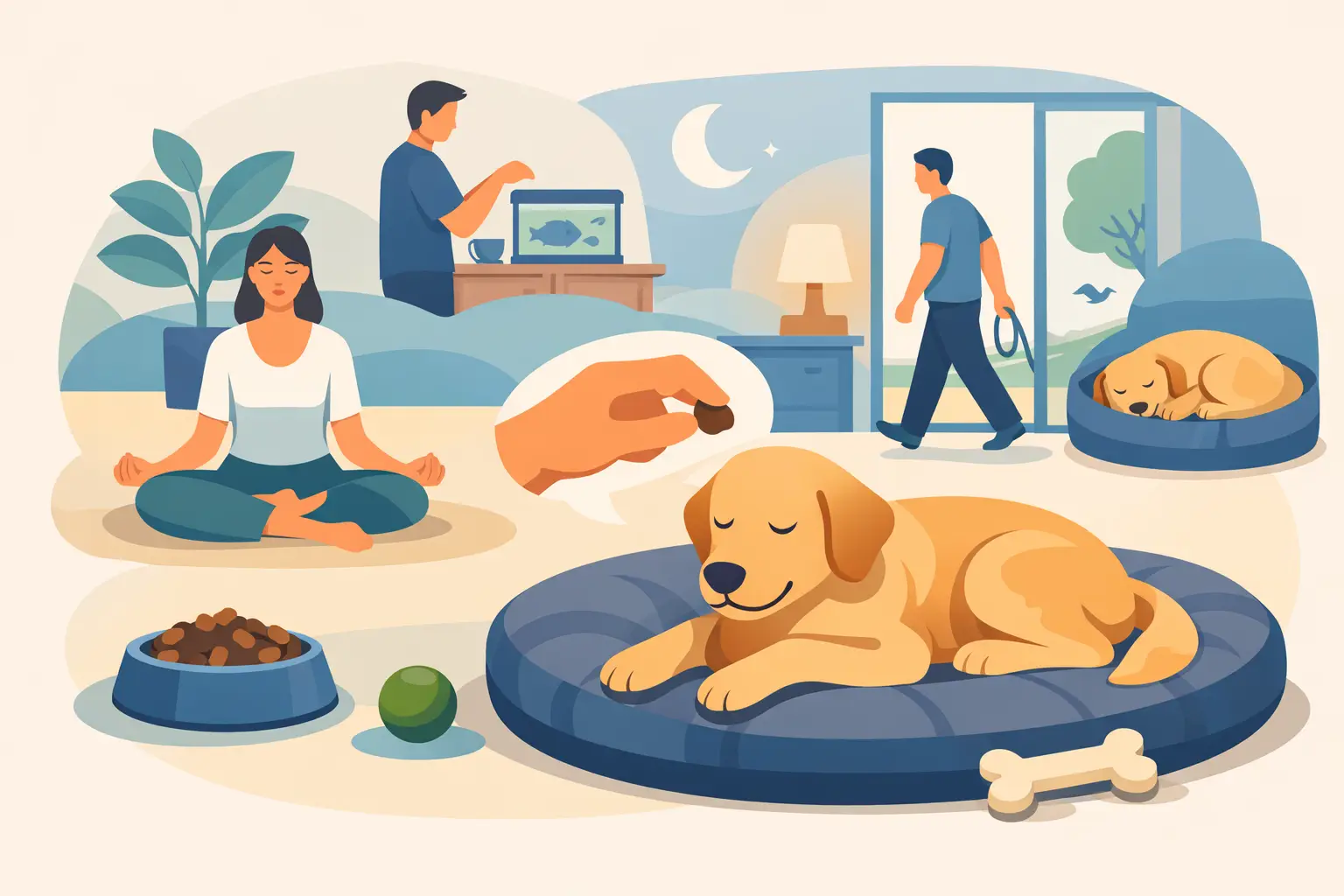
Practice with low stakes. Walk to the door. Touch the handle. Step back. Ask for the calm behavior. Reward it. Open the door an inch. Close it. Reward calm again. Then build from there. You are teaching your dog that calm behavior makes the door open, not frantic behavior.
This is where a lot of owners quit too soon. They do a few reps, the dog seems better, then they try it during a real visit with kids, bags, noise, and everybody talking at once. That is not training. That is a stress test.
Train the picture you want in small pieces first.
Use management while the skill is still weak
Management is not cheating. It is how you prevent more bad reps.
If your dog loses control when guests enter, use distance, a leash indoors, a baby gate, or a place command before the door opens. That does not mean your dog will always need those tools. It means you are buying enough structure to practice success.
A dog cannot learn better greeting habits if every visitor turns into another rehearsal of lunging, barking, and jumping.
Coach the people too
This part matters more than owners want to admit. Your dog is not the only one being trained.
Guests need simple directions. No reaching down right away. No squealing. No rewarding jumping with eye contact or touch. If your dog is working on calm greetings, the person entering should help create that calm, not blow it up.
Kids especially need a plan. A dog who gets overexcited around fast movement and high voices may need more distance and shorter interactions. That is not failure. That is good judgment.
Greeting manners on walks are a different skill
A lot of dogs who are manageable at home still lose their minds on neighborhood walks. Owners often assume their dog is being “friendly,” but pulling hard toward every person or dog is still poor greeting behavior. Friendly and out of control are not the same thing.
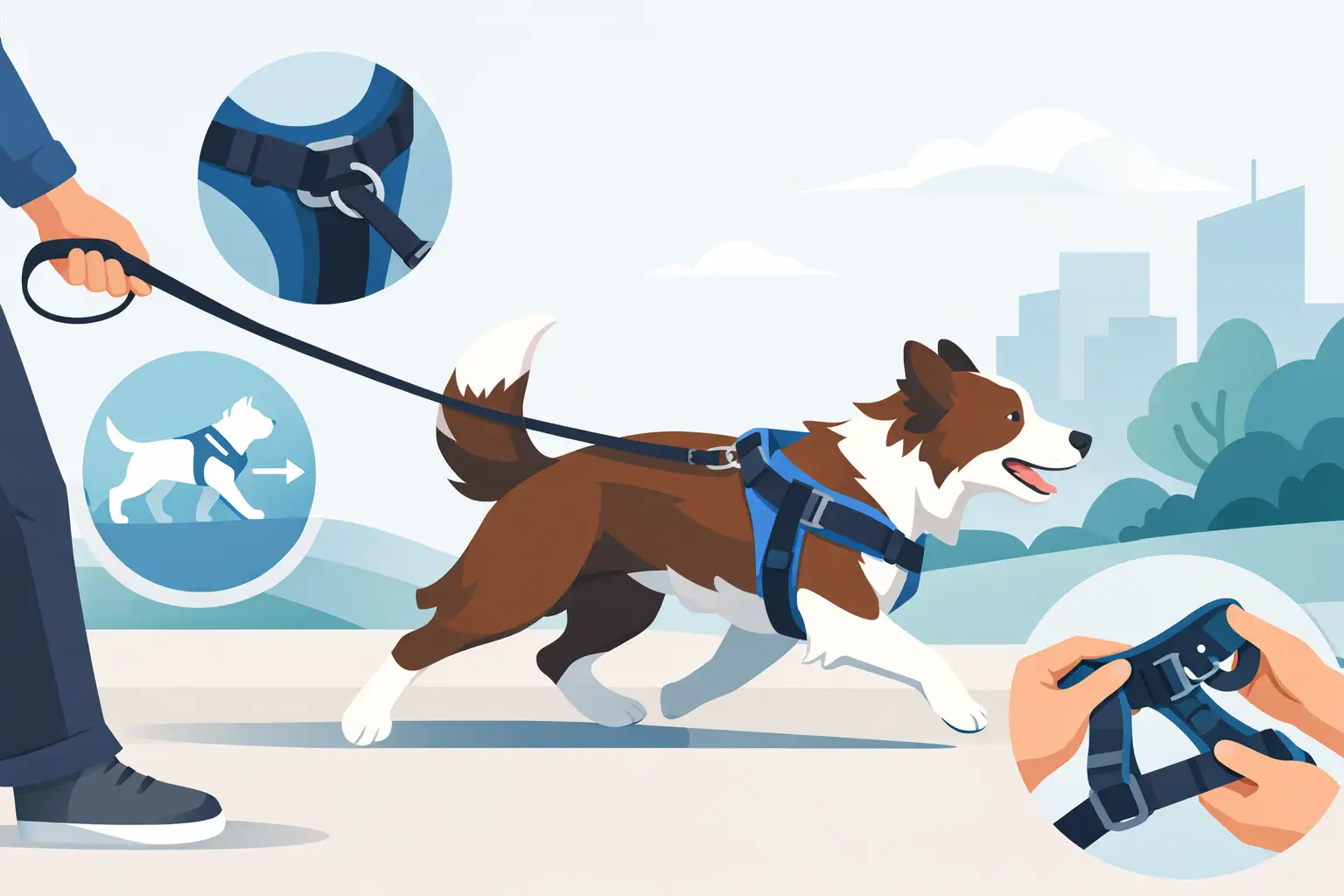
On walks, greeting manners depend heavily on whether your dog can stay connected to you. If your dog drags you to every stroller, jogger, and passing dog, the issue is no longer just greeting. It is responsiveness.
That means not every walk should include greetings. In fact, for many dogs, fewer greetings create better manners. When a dog expects access to everyone, frustration builds the second access is delayed. Then you get whining, lunging, barking, or frantic pulling.
Teach your dog that seeing someone does not automatically mean going over.
Build neutrality before socializing
This is the part many families skip. They want their dog to be social, so they let the dog meet everybody. But a dog that has to greet every person or dog is not actually socialized well. That dog is dependent on interaction.
A better goal is neutrality. Your dog notices people and dogs, stays under control, and looks to you for direction. That creates a calmer dog in real life.
Practice passing people at a distance where your dog can still think. Reward attention to you, loose leash walking, and calm observation. If your dog starts to lock in, pull, or speed up, you are too close or moving too fast.
There is no prize for forcing a greeting your dog is not ready to handle.
What to do instead of letting your dog rush in
When owners ask how to improve dog greeting manners, they often want a script. Good. Scripts help because they remove guesswork.
At home, your script might be: dog on leash, guest enters, dog holds a place or keeps four paws on the floor, then earns calm attention. If the dog pops up, the greeting pauses. Calm makes the interaction continue.
On walks, your script might be: see a person, slow down, ask for attention, reward calm, then decide whether this is a training moment or a true greeting opportunity. Not every person needs to meet your dog. Not every dog should meet your dog.
That last part is worth saying plainly. You do not improve greeting manners by allowing bad greetings and hoping your dog settles down. You improve them by deciding what counts as permission and making your dog earn access through self-control.
Common mistakes that slow progress
Owners are often closer than they think, but a few habits keep the problem going.
The first is moving too quickly. If your dog can greet one calm adult successfully, that does not mean your dog is ready for a loud family gathering.
The second is repeating cues your dog has no chance of following. Saying “sit, sit, sit” while your dog is airborne only teaches your dog that your words are background noise.
The third is rewarding excitement by accident. Talking fast, petting too soon, letting the leash tighten and carry the dog forward - it all adds up.
And the fourth is inconsistency between family members. If one person requires calm and another allows chaos, the dog learns that the rules are negotiable.
They are only negotiable if you make them negotiable.
How long does it take?
It depends on the dog, the history, and how disciplined the humans are.
A young, social dog with sloppy habits may improve quickly once the rules are clear. A dog with a long history of over-arousal, barking at visitors, or dragging toward people on walks will usually need more structure and more repetition. Dogs do not struggle because they are stubborn. Most struggle because the picture is unclear or the practice has been inconsistent.
That is why owner follow-through matters so much. A few focused sessions each week will help, but daily repetition in normal life is what changes behavior. The front door, the sidewalk, the neighbor saying hello, the friend stopping by - those are the real training reps.
For many families in busy areas like West Chester, Downingtown, or King of Prussia, greeting problems are not occasional. They happen every day. That is actually good news, because frequent situations give you frequent chances to train, as long as you stop treating every greeting like a free-for-all.
When to get help
If your dog’s greeting behavior includes hard barking, growling, intense leash reactions, body slamming, or a complete inability to settle, outside coaching can save you time and frustration. So can help with households where multiple people are handling the dog differently.
A good trainer does more than work the dog. They coach the owners, tighten the routine, and show you exactly where your timing or expectations are breaking down. That matters because behavior change is rarely about one magic correction. It is about structure, repetition, and clearer handling.
At Echo Dogs Training, that is the focus - practical, owner-led work that creates calmer greetings you can actually live with.
Your dog does not need to greet the world like a party host. Calm is enough. Polite is enough. Start there, stick with it, and let your consistency do the teaching.